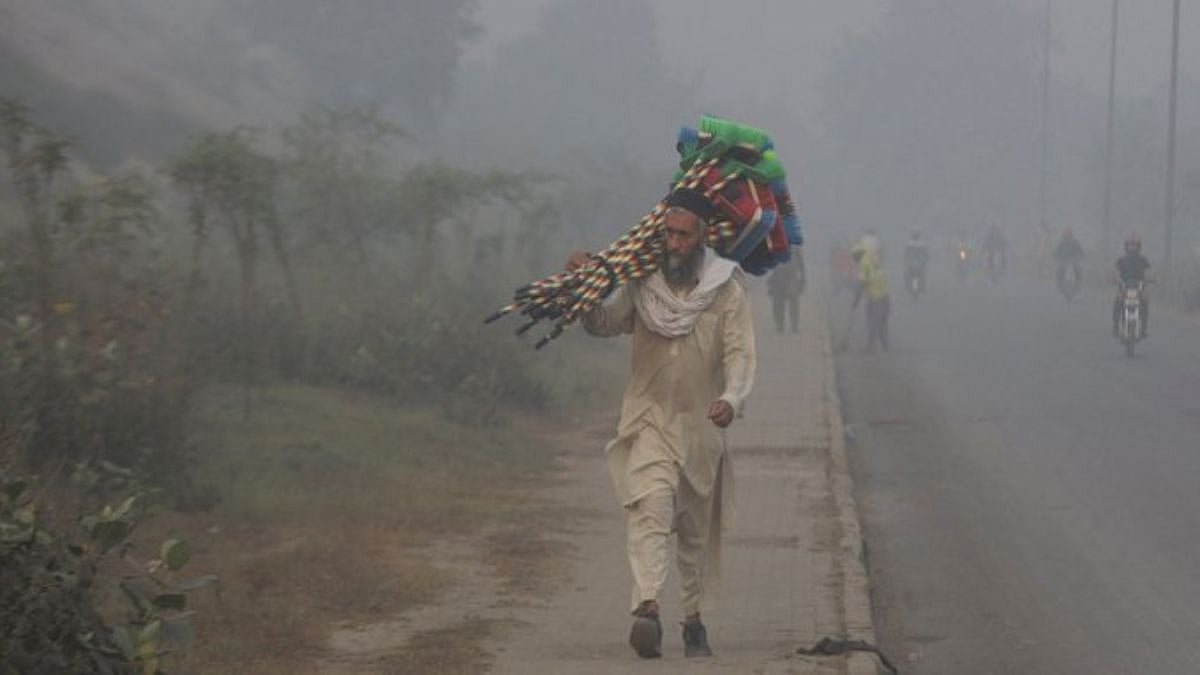
In many Indian cities today, especially the NCR, breathing has quietly become a calculated risk. Citizens have become unwilling risk managers, checking pollution apps the way previous generations checked the weather. Parents plan school days around air quality, the elderly retreat indoors, and outdoor labour continues regardless of health cost.
Against this lived reality, parliamentarians’ assertions recently questioning the link between air quality and health are signals of how development is being perceived politically and whose well-being is considered expendable.
For a lower-middle-income economy that we are, such signals demand serious reflection. The institutional pillars of our democracy have not safeguarded the quality of everyday living, distracted by a politics that lurches from one urgency to the next.
Governance increasingly resembles event management, public debate collapses into memes, and policy attention is consumed by the fear of missing the next headline. Development is promised in futures so distant that many citizens may never live to experience them, while the conditions of daily urban life steadily deteriorate.
Air pollution is a long-established public health challenge with extensive global and domestic evidence. Fine particulate matter, particularly PM2.5, is known to penetrate deep into the lungs and bloodstream, aggravating respiratory and cardiovascular disease, reducing life expectancy and impairing childhood development. These relationships are neither novel nor speculative. They form the basis of environmental health policy in every major economy.
Development at this stage is not merely about expanding national output or building infrastructure. It is fundamentally also about building human capital. Health, longevity, cognitive capacity and productive years of life are the true multipliers of growth. What appears as economic progress on paper is quietly offset by declining physical resilience and rising healthcare burdens.
At the same time, much of the hospital infrastructure is quietly being consolidated by private capital, while public healthcare capacity has failed to expand at a commensurate pace. When public health is framed as secondary to economic optics, governance begins to feel detached rather than protective.
India’s pollution crisis is no longer geographically exceptional. While Delhi and the NCR dominate headlines, deteriorating air quality is now a structural feature of urbanisation across the country. Even Mumbai has been talking of a strange word in its midst—increasing ‘AQI’. Major metros, tier-two cities, industrial corridors and rapidly expanding urban clusters regularly breach safe limits.
Urbanisation was never optional for a growing economy like ours. Its environmental consequences were foreseeable. What was expected in return was anticipatory governance. That includes integrated transport planning, enforcement of emissions standards, industrial accountability, land-use regulation, and sustained investment in cleaner energy systems. Instead, policy responses have often been reactive, episodic, and symbolic. Emergency restrictions during pollution peaks create the appearance of action without addressing structural drivers.
Air pollution is not the only degradation that urban India has learnt to endure. It is merely the most visible and measurable. Many of our cities are simultaneously grappling with contaminated water, chronic waste mismanagement, landfill fires, rising noise pollution, shrinking green cover, heat-trapping concrete sprawl, recurrent flooding from fragile drainage systems, unsafe roads, overcrowded transport, and the quiet erosion of public spaces.
Urban life is increasingly defined by accumulation rather than planning. Even the visual and civic order of cities has been surrendered. Streets, flyovers, and neighbourhoods are routinely defaced by political banners, cut-outs, and posters, erected in the name of loyalty and left untouched in the name of convenience.
Politicians profess helplessness, citing the enthusiasm of supporters, while municipal laws remain unenforced and civic dignity steadily recedes. Together, they signal that the commons no longer belong to citizens and that degradation has been normalised as the price of political comfort.
This brings us to an unavoidable question. What does Viksit Bharat mean if daily living itself becomes unaffordable in physical terms? If breathing clean air, stepping outside without risk, or raising children without chronic exposure to pollutants feels increasingly unattainable, then development has lost its human anchor.
Urbanisation, material expansion, and infrastructure growth are being pursued as ends in themselves, often without inclusion and frequently at the cost of ecological balance. How much longer are citizens expected to hold themselves hostage to the promise of the next electoral cycle, absorbing cumulative harm today in exchange for deferred assurance tomorrow? Development cannot be a perpetual postponement of liveability.
There is also a deeper institutional question at play. Development is not value-neutral. Every model of growth reflects choices about what is prioritised and what is tolerated. The implicit message is that citizens must endure diminished living conditions in exchange for national ambition. That is not a sustainable social contract.
The economic argument for cleaner air is equally compelling. Pollution imposes substantial hidden costs through healthcare expenditure, productivity losses, absenteeism, and premature mortality. These costs are borne disproportionately by households, not the state. Far from slowing growth, cleaner air strengthens economic resilience. Countries that addressed air pollution decisively did not stall. They advanced with healthier, more productive populations.
What makes this failure harder to justify is that the state is not operating in ignorance. India today possesses more data, regulatory tools and administrative reach than at any point in its history. When governance systems can track tax compliance to the last rupee and voter sentiment to the last constituency, yet fail to secure something as elemental as breathable air, the conclusion is unavoidable.
India’s aspiration to become a developed nation cannot rest solely on scale, speed or global standing. It must be grounded in outcomes that citizens can feel in their bodies and daily lives. For politicians, policymakers, and administrators, the choice is now stark. But if only they actually cared.
Dr Srinath Sridharan is a policy researcher and corporate adviser. X: @ssmumbai