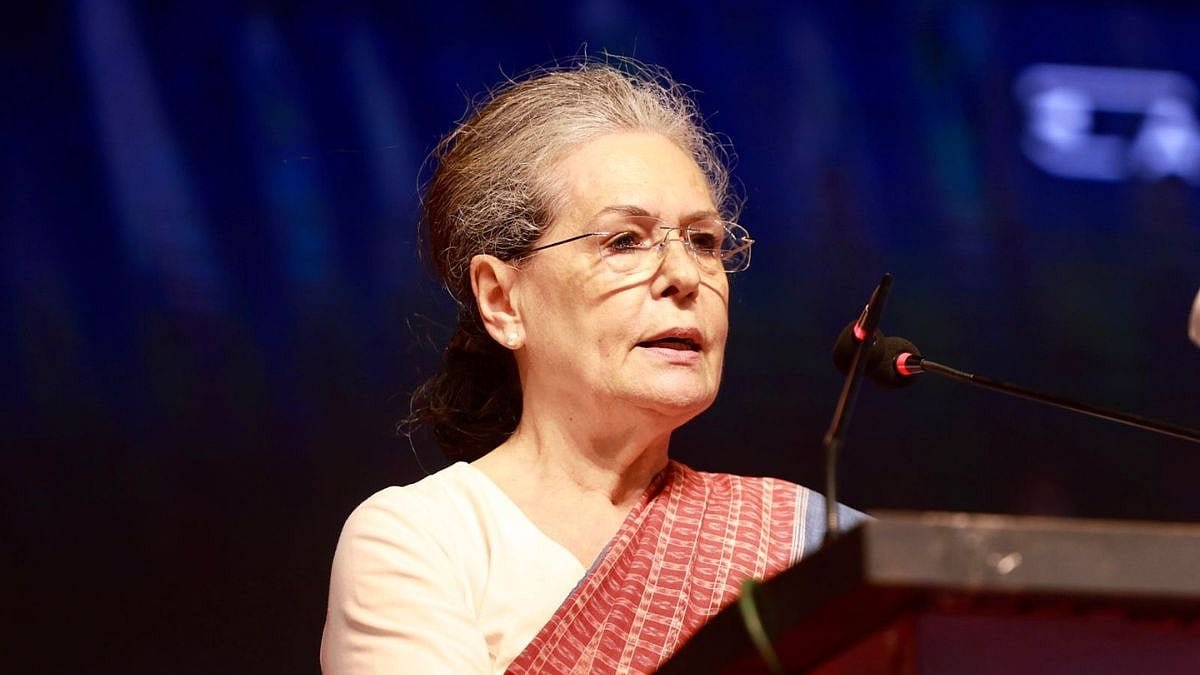
New Delhi: Congress Parliamentary Party (CPP) chairperson Sonia Gandhi on Monday launched a sharp attack on the BJP-led Centre, accusing it of systematically bulldozing the Mahatma Gandhi National Rural Employment Guarantee Act (MGNREGA) and cautioning that its replacement would have “catastrophic consequences” for India’s rural population.
Her remarks come days after Parliament passed the Viksit Bharat Guarantee for Employment and Livelihood Mission (Rural) Bill, commonly referred to as the VB-G RAM G Bill, amid strong protests by the Opposition.
Details
In an article published in a leading national daily, Sonia Gandhi argued that MGNREGA, enacted in 2005 under the UPA as a rights-based legislation guaranteeing the constitutional right to work, was being effectively dismantled “without discussion, consultation or respect for parliamentary processes.”
न जनसंवाद, न संसद में चर्चा, न राज्यों की सहमति – मोदी सरकार ने मनरेगा और लोकतंत्र दोनों पर बुलडोज़र चला दिया है।
यह विकास नहीं, विनाश है – जिसकी कीमत करोड़ों मेहनतकश भारतीय अपनी रोज़ी रोटी गंवा कर चुकाएंगे।
कांग्रेस संसदीय दल की अध्यक्ष श्रीमती सोनिया गांधी जी का इस गंभीर… pic.twitter.com/FOL77e4onQ
— Rahul Gandhi (@RahulGandhi) December 22, 2025
“The removal of Mahatma Gandhi’s name is only the tip of the iceberg,” she wrote, describing it as emblematic of a “deeper structural annihilation” of what she called the world’s largest social security programme.
According to Sonia Gandhi, the effort to “throttle” MGNREGA did not begin overnight. She said the ruling BJP had pursued a “death by a thousand cuts” approach over the years, gradually hollowing out the scheme through “stagnant budgets, delayed payments” and what she termed “disenfranchising technology”, rendering it increasingly ineffective on the ground.
The Congress, along with other Opposition parties, had demanded that the Bill be referred to a standing committee and later pressed for its withdrawal.
Despite these objections, the legislation was passed by both Houses after Opposition MPs staged a walkout. The Bill subsequently received President Droupadi Murmu’s assent and became law on Sunday.
Sonia Gandhi alleged that the new Act replaces a statutory employment guarantee with what she described as a “bureaucratic, discretionary programme”, fundamentally changing the nature of rural employment support.
“Demand-driven, uncapped employment has been replaced by fixed budget caps set by the Union government,” she wrote, arguing that this shift strikes at the heart of MGNREGA’s original promise.
She also highlighted provisions that, according to her, end year-round work, introduce up to 60 “no-work” days during the peak agricultural season, and sharply raise the states’ share of funding from 10 per cent to 40 per cent.
“By transferring a significant portion of the expense onto the states, the Modi government is discouraging implementation,” the Congress leader said, warning that already strained state finances would be “further devastated.”
Accusing the Centre of excessive centralisation, the Congress leader said the new framework sidelines gram sabhas and panchayats, replacing decentralised planning with a top-down model linked to the PM GatiShakti National Master Plan.
“This is centralisation with a vengeance,” she wrote.
Rejecting the government’s claim that the revamped scheme would guarantee up to 125 days of employment, Gandhi termed the promise “misleading and unachievable”.
Sonia Gandhi underscored MGNREGA’s role in bolstering rural wages, curbing distress migration and strengthening local self-governance, noting that during the Covid-19 pandemic, it remained one of the few mechanisms through which assistance reached the poorest households.
“The demolition of the right to work must not be seen in isolation,” she wrote, linking it to what she described as a broader assault on rights-based laws, including legislation related to information, education, forest rights and land acquisition.
“MGNREGA realised the Mahatma’s vision of Sarvodaya, or welfare of all, and gave effect to the constitutional right to work. Its death is our collective moral failure, one that will have financial and human consequences for crores of India’s working people for years to come. It is imperative, now more than ever, to unite and safeguard the rights that protect us all,” she added.
Meanwhile, with President Murmu granting assent to the VB-G RAM G Bill, the legislation has formally come into force. Following the approval, Union Minister for Rural Development and Agriculture and Farmers’ Welfare Shivraj Singh Chouhan issued a detailed statement outlining the features of the ‘Viksit Bharat: G Ram G Act’ and countering what he described as misconceptions surrounding the new law.
The Union Minister said there was a deliberate attempt to mislead the public in the name of MGNREGA. “Rumours are being spread, whereas the truth is that the ‘Viksit Bharat: G Ram G Yojana’ is a progressive step forward from MGNREGA,” he said.
Union Minister Chouhan maintained that the new programme provides a statutory guarantee of 125 days of employment, an increase from the earlier 100 days.
“The provision for unemployment allowance in case of non-availability of work has also been further strengthened. Additionally, if there is a delay in payment of wages, there is now a provision for additional compensation,” he added, asserting that the revamped law enhances both coverage and accountability.
(Except for the headline, this article has not been edited by FPJ’s editorial team and is auto-generated from an agency feed.)