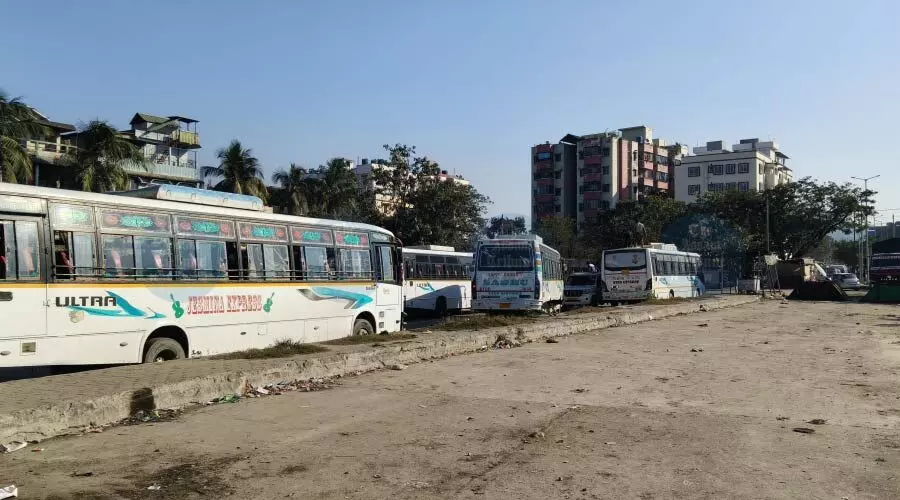
Guwahati, Dec 19: Once a bustling transport hub that connected Guwahati with the districts of Lower Assam, Adabari Bus Station has today turned into a desolate stretch of land, overgrown with grass and marked by silence.
From dawn to late night, the station earlier thronged with passengers, buses, shops, lights, and livelihoods. Now, only an occasional vehicle, mostly for repairs, breaks the stillness, while just one bus reportedly operates from the area.
For decades, Adabari served as a vital node in the city’s public transport network, especially for daily commuters and traders traveling to and from Lower Assam. Its abrupt decline has left residents and stakeholders grappling with inconvenience and uncertainty.
Locals say the closure has not only disrupted travel but also dismantled an ecosystem of small businesses that depended on the steady footfall.
Bus services have largely been shifted to Inter State Bus Terminus (ISBT) Guwahati and Khanapara, but passengers complain that adequate infrastructure has not followed the relocation.
At Jalukbari, buses reportedly stop dangerously along the roadside, without a proper terminal or sheltered bus stop. With the stop moved further towards Dr Bhupen Hazarika Setu, commuters are often forced to walk long distances or arrange additional transport.
“There was real convenience earlier,” said a bus driver. “Without Adabari, both passengers and drivers are facing difficulties. This place was centrally located and easy to access.”
Locals also expressed anguish over the emotional and economic loss.
“This isn’t just a 30-year-old facility but a part of our lives,” said a local. “The decision to shut it down is unclear, and moving everything towards Jalukbari and ISBT has only created more problems.”
Shopkeepers who ran businesses here for decades say the impact has been devastating.
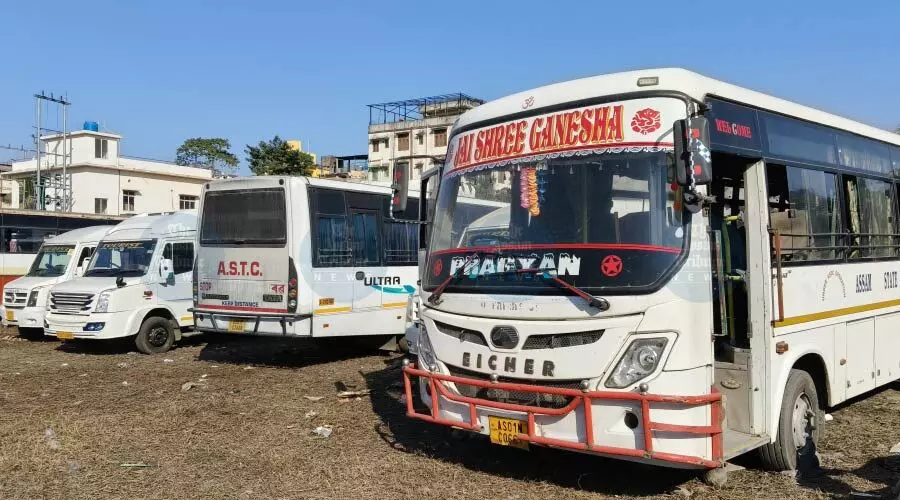
The few buses in Adabari (AT Image)
“I’ve had my shop here for 22 years,” said one trader. “With no buses and no people, business has collapsed. Somehow, we’re managing to support our families.”
Another shopkeeper added, “If a vehicle comes for repair, we earn Rs 10-20. Otherwise, there’s nothing. The old environment is completely gone.”
Passengers echoed similar concerns.
“Earlier, buses were right here,” a commuter said. “Now you have to walk a long distance. If you’re in a hurry, it becomes a serious problem. You end up paying extra for autos or other transport.”
Several locals questioned the government’s intent and the absence of clarity about the future of the site.
“For the past year, Lower Assam passengers have suffered the most,” said a resident. “ISBT works better for Upper Assam routes, but Adabari was ideal for Lower Assam. Now people who worked here are jobless, hotels have shut, and even today, some passengers come here thinking buses still run but only to be disappointed.”
Amid rumors about alternative use of the land and allegations of administrative apathy, there has been no official word on whether Adabari Bus Station will be revived or redeveloped.
For now, a place once synonymous with movement and connection stands as a reminder of neglect and its future uncertain.